Keloid Scar Treatment at Our Private Liverpool Clinic
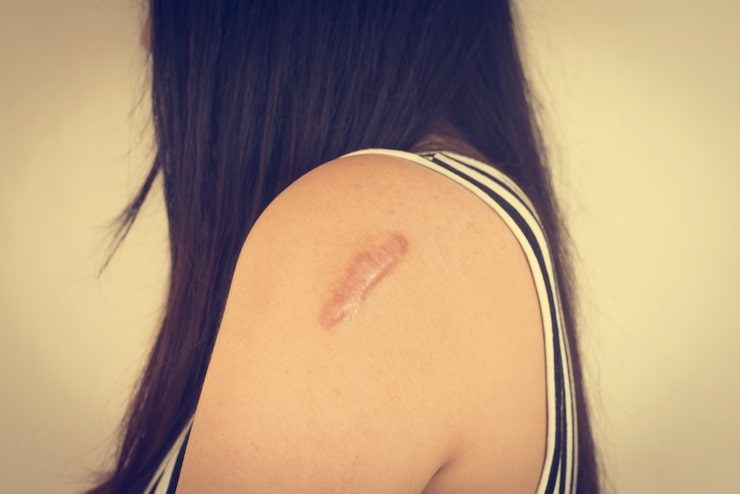
Keloid scars form when an abnormal wound healing response causes fibroblast proliferation beyond the boundaries of the original injury. Unlike hypertrophic scars, which remain confined to the wound margins, keloids extend into the surrounding normal skin and may continue to enlarge indefinitely.
They arise from a wide range of stimuli — ear piercings, acne, Treatments incisions, burns and even minor abrasions — and are recognised as significantly more prevalent in individuals of African, Asian and Hispanic ethnicity.
Keloids are not merely a cosmetic concern. Many patients present with pruritus, tenderness, a burning sensation and a considerable degree of psychological distress. Effective, clinician-led treatment is available at our Liverpool clinic, and we encourage patients to seek assessment early, before the lesion has the opportunity to enlarge further.
Who Is Most Likely to Develop Keloids?
Keloid formation is not random. Certain individuals carry a significantly elevated risk, and awareness of this can inform both treatment decisions and post-treatment prevention.
Ethnicity: Keloids are fifteen times more prevalent in individuals with darker skin phototypes. African, Caribbean, South Asian and East Asian heritage all carry increased risk. Liverpool’s diverse population means we see a broad range of presentations and are experienced in treating all skin types.
Anatomical site: The earlobes, anterior chest, shoulders, upper back and jaw are the most frequent locations. Lesions over the sternum and shoulder are among the most challenging to treat due to the mechanical tension placed on these sites.
Age: Keloids are most commonly first reported in the second and third decades of life.
Family history: A familial tendency to keloid formation is recognised.
Previous keloids: Patients with one keloid are at elevated risk of developing further lesions following subsequent skin injury.
Keloid Treatment Options at Our Liverpool Clinic
Initial Assessment
All patients are individually assessed before any treatment is commenced. We review the size, location, maturity, symptom profile and treatment history of the keloid, and discuss the available options with you in full.
Intralesional Corticosteroid Injection
Corticosteroid — most commonly triamcinolone acetonide — is injected directly into the body of the keloid under local anaesthesia. This suppresses fibroblast activity, reduces collagen synthesis and progressively flattens and softens the lesion over a structured course of injections administered at four to six-week intervals. Intralesional injection is the first-line approach for the majority of keloids, particularly earlobe lesions and small to medium-sized lesions on the trunk and limbs.
Treatments Excision
For larger, more established or symptomatic keloids, Treatments removal under local anaesthetic may be the appropriate primary intervention. Excision alone carries a meaningful recurrence risk; accordingly, we combine Treatments treatment with a structured post-operative injection protocol commencing approximately four weeks following wound closure. This combined approach represents the current evidence-based standard for keloid management.
Post-Treatment Aftercare
Adjunctive measures — including medical-grade silicone gel sheeting, pressure therapy and specific wound management protocols — play an important role in reducing recurrence risk and are discussed individually with each patient. We provide a structured follow-up plan for all patients following treatment at our Liverpool clinic.
Why Patients Across Merseyside Choose Our Liverpool Clinic
Patients from Liverpool, the Wirral, Knowsley, Sefton and St Helens choose Canova Medical for keloid treatment because we offer what NHS pathways currently struggle to provide: prompt access, a genuinely individualised assessment, and the full range of treatment options delivered in a single clinic setting.
We have extensive experience treating keloids across all skin phototypes, including Fitzpatrick types IV, V and VI — an expertise that matters when selecting injection concentrations, Treatments technique and scar management protocols.
We are always honest about realistic outcomes. Keloids are challenging to treat, and no clinician should promise complete and permanent resolution. What we can offer is the most effective evidence-based protocol available, delivered with continuity and close follow-up.
Keloid Treatment — Key Information
Injection session duration | 15-30 minutes |
Excision duration | 30–50 minutes |
Injection course | Typically 2–4 sessions |
Interval between injections | 4–6 weeks |
Anaesthetic | Local anaesthetic only |
Downtime | Minimal |
Follow-up | Structured post-treatment plan included |
A Note on Recurrence
We believe every patient deserves an honest assessment. Keloid scars carry a recognised recurrence tendency, and no treatment entirely eliminates this risk. The combination of Treatments excision and post-operative corticosteroid injections significantly reduces — but does not always eliminate — the likelihood of recurrence. We will always give you a clear, realistic picture of expected outcomes before treatment begins.